Dementia in Prison
Dementia is a growing issue; currently the number of people [in the community] with dementia is estimated at 850,000 and this number continues to grow as individuals are living longer. This situation mirrors that of the prison population; with a growing older cohort, dementia has now become a very real issue throughout the prison estate. In 2020, it was estimated that the prevalence rate of [people suffering from] suspected dementia and mild cognitive impairment in the prison population of England and Wales is 8%. This equates to 1090 individuals. Although not recorded, this number will have inevitably increased over the last five years, potentially exacerbated by the COVID-19 pandemic and continuous regime changes and lockdowns.
The increase in dementia or memory issues not only affects the person and their families, but also the prison staff who work with them on a daily basis. People with Dementia in prison won’t automatically be moved to a healthcare wing or get support from the Local Authority, often, because of the structured regime in prison, the signs of dementia can be missed or confused with bad behaviour. Some staff, dependent on their location will receive specialist dementia training; however, this is not mandatory meaning that there are often a number of gaps in dementia care for the older cohort.
HMP Wymott & the Buddy Programme
As part of Dementia Awareness Week, we want to shine a light on the great work of the prison staff at HMP Wymott and how the Recoop Buddy Programme has helped support the work they do. HMP Wymott, based in Leyland, Lancashire is a closed category C prison with a total of around 1000 inmates. One of the wings at Wymott, the Haven Unit, is used exclusively for those with health problems and some people with health issues from other prisons will be sent to the Haven Unit.

One of the health issues that is increasingly witnessed on the unit is dementia and related memory issues, “I think lockdown on the wing, especially the Haven has had a massive impact [on memory issues]” states Liz, Prison Officer at Wymott “I have often felt helpless at times. Quite sad. At times when I worked on the Haven unit and we had no carers I would try to do my best to help prisoners and it would leave me drained both physically and mentally”. Mark, a fellow prison officer, also agrees that the job can be hard; “it is draining on you as an individual, physically and mentally. By the end of the day you’re exhausted”.
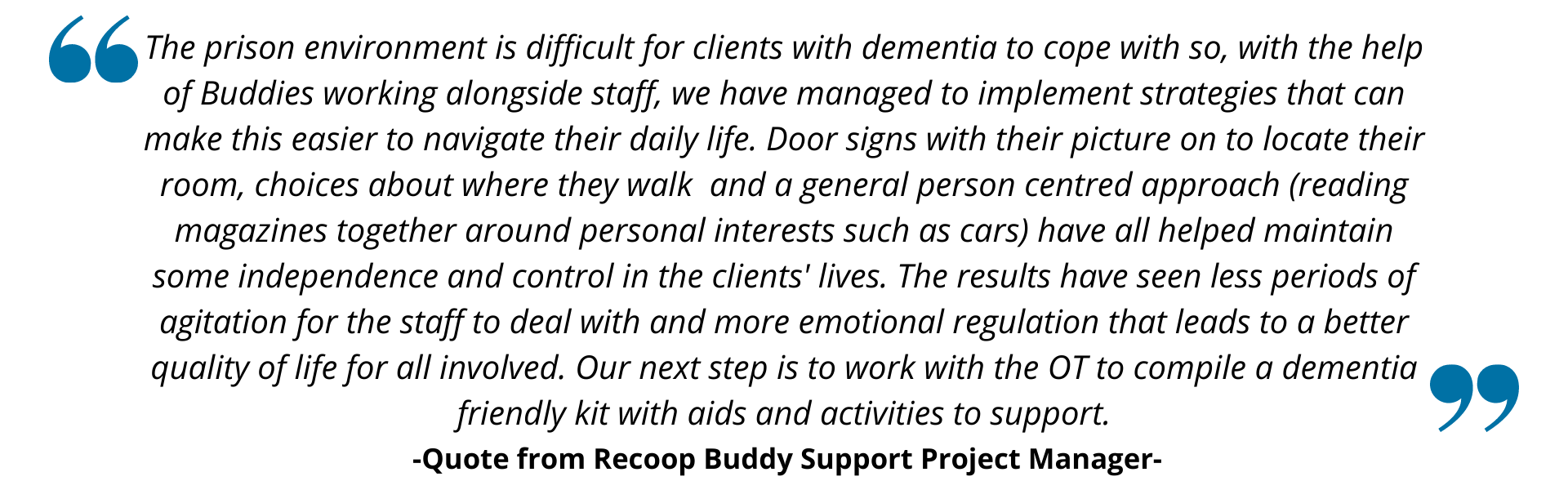
The Buddy programme trains up fellow prisoners to provide care and support to those who suffer from physical or mental health issues such as dementia. This programme has not only had a positive outcome for those they support but it has also had a very real impact on the staff. “Without the buddies the job would be 10 times harder for the staff, no job is too big for them. They work really hard and will drop everything to help” says Mark. The compassion and care that the buddies provide to their clients cannot be underestimated and it is clear the staff find the buddies incredibly important, so much so that Mark states that “buddies and staff work hand in hand”. Liz also draws on a particular example that shows how vital the work of the buddies can be; “Helping a man who was unkempt and withdrawn. Chatting with him. Building good relationships by encouraging him to keep a clean cell and maintain a good level of hygiene without judging him. That man then went on to trust staff more and was able to build relationships with them.”
Ultimately, the programme encourages those supported by the buddies the chance to retain their independence; giving them a better quality of life while serving their sentence. However, when an individual is suffering with dementia, this may not be completely possible and some individuals may face a decline in their cognitive ability indefinitely. For severe cases Liz states “I would encourage Dementia units as standalone buildings with staff that want to work on them”. This would allow the individual to have specialised care and support in a familiar, non-changing environment. In fact this was the case with an individual who had very severe dementia at the Haven Unit. ”He could be aggressive and violent, when he got Covid he went downhill and kept falling so I had to pick him up off of the floor” says Mark “It took a long time to get him into the secure unit but the staff from the unit who assessed him said it was absolutely perfect for him”.
Conclusion
The Haven Unit is an example of how individuals with dementia can be given individualised and supportive care in prison. With the rising rates of dementia in prison, the Haven unit is an incredibly important step in making sure those who need support for dementia or cognitive impairment receive the care they need. However, it is clear to see that specialised secure units are needed for those with more severe or advanced dementia.
We’d like to thank those who contributed or their time and help with this article. Please note, names have been changed to protect individual’s identities.