Around 8% of prisoners aged 50 and over in England and Wales are estimated to have dementia or mild cognitive impairment, equating to approximately 1,090 older prisoners.
A gap in provision
No specific dementia or mild cognitive impairment care pathway has been implemented that is applicable and appropriate for use across different prisons in England and Wales. Only a third of prisons routinely screen for dementia.
Without screening, cases go unidentified. Negative consequences of unidentified cognitive impairment in the prison setting include victimisation, unwarranted disciplinary actions and difficulty with compliance. A prisoner who cannot remember the rules may not be non-compliant but living with dementia and prison staff are not routinely trained to tell the difference.
Noise, unpredictable routines and frequent moves between cells or wings can be disorienting and adaptations that are standard in residential care in the community are rarely available. The prison environment itself is not supportive of the needs of those with dementia or mild cognitive impairment.
Case Study: What it looks like in practice
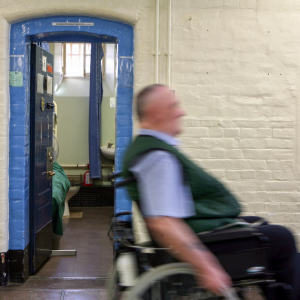
When the Buddy programme launched at HMP Garth, one of the first people identified for support was a prisoner with early onset dementia and significant physical disabilities. The loss of his toes had affected his balance and his ability to wash safely. He had a reputation for being difficult and was hostile to people he did not know. Staff described him as challenging.
He was matched with two Buddies and showed early signs of progress. His personal hygiene improved. He started sitting on the landing watching other prisoners play pool. Then the prison regime got in the way, disruptions to routine increased his frustration and set things back. It took time for staff to understand what the Buddy team were trying to achieve, and their support made a difference once they did.
A further setback came when, as a result of his dementia, he developed a personal disliking to one of his Buddies. Rather than withdrawing support, the team looked for a different solution. Another prisoner on the wing who he already got on with expressed an interest in becoming a Buddy. He was trained, observed, and assigned.
Five months later, the same man was unrecognisable. He was well-groomed every day, wearing new clothes, back watching pool with other prisoners, and interacting positively with those around him. He had a new wheelchair so he could get to healthcare appointments and visits independently. A staff member summed it up: “His buddy does excellent work and he is doing so well, constantly improving.”
What is being done
The DECISION study is the most substantial research effort to date to develop a usable dementia care pathway for prisons in England and Wales. Key elements of the proposed pathway include specialist training for dementia care coordinators, ageing awareness training for all prison staff, use of cognitive screening tools and release planning that includes awareness-raising among probation and third sector staff working with people released from prison who have dementia or mild cognitive impairment.
The numbers ahead
Approximately 982,000 people in the UK have a diagnosis of dementia, projected to rise to 1,400,000 by 2040. The older prison population is growing faster than the general population, driven by longer sentences and more convictions for historical offences. The number of prisoners with dementia will rise with it.
Recoop’s position
Cognitive decline, whether diagnosed or not, is present among the people Recoop supports. The HMP Garth case shows what targeted peer support can achieve, but it also shows how much currently depends on individual initiative rather than any systematic provision. Dementia affects how people engage with activities, manage daily routines, and cope with custody. It shapes what happens at release too. A person with dementia leaving prison faces practical and safety challenges that standard resettlement provision is not designed to address.