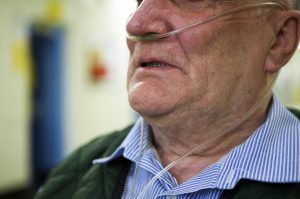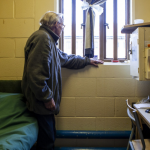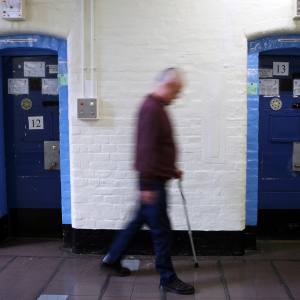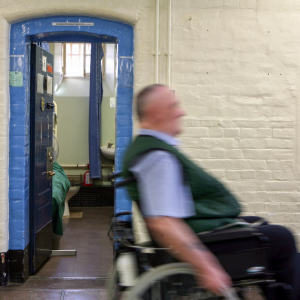
For older people leaving custody, release can mark the beginning of a period of vulnerability and many are poorly prepared and insufficiently supported.
The cliff edge of release
During a custodial sentence, basic needs are met such as accommodation, food, healthcare and routine. For older people who have been inside for a significant period, that structure can become the only one they know. On release individuals are expected to navigate housing applications, benefits systems, healthcare registration, financial management, which can be an enormous challenge.
Our Resettlement Programme addresses these issues directly, equipping participants with the practical knowledge and skills to manage benefits and personal budgeting, access community services and begin rebuilding life outside.
The health gap
Healthcare in custody provides a degree of consistency. Medication is administered, appointments are kept, conditions are monitored. On release, that continuity is frequently broken; GP registration takes time, prescriptions lapse and specialist referrals can be lost in the transition.
For older people managing complex, chronic health conditions, which the majority do, this gap can have rapid and serious consequences. Research shows that mortality risk among people released from prison is significantly elevated, particularly in the weeks immediately following release. Health and wellbeing is a core component of the Resettlement Programme, providing people with the information they need to manage their health needs from the point of release.
 Social isolation
Many older people leave prison without meaningful social connections to return to. Relationships with family may have broken down during a long sentence, friends may have died and communities will have changed.
Social isolation among older people is well-documented as a serious health risk, associated with cognitive decline, depression and increased mortality. For those leaving prison, that isolation is frequently immediate. There is no gradual transition. Recoop’s Programme includes dedicated sessions on re-establishing links with friends and family, as well as exploring volunteering as a route back into community life, recognising that many older people leaving custody are approaching retirement age rather than actively seeking employment.
Housing instability
Stable housing is one of the strongest protective factors against reoffending and deterioration in health and wellbeing. People leaving prison experience homelessness at a rate 40 times higher than the general population. For older prisoners, the position is often more complicated.
Finding appropriate accommodation for older prisoners after release is central to successful resettlement and preventing reoffending, yet it can be very difficult for older prisoners and prison authorities assisting them. Approved Premises, where many older prisoners are required to reside under licence conditions, are frequently unable to accommodate individuals with disabilities, accessibility needs or complex health conditions. Recoop has adapted its Resettlement Programme for delivery in Approved Premises as well as in custody, following positive feedback from both residents and staff at pilot sites.
Research consistently shows that 79% of those who were homeless before custody reoffend within a year, underlining the importance of addressing housing needs as a priority.
The particular challenge of late-life release
For those who have served long sentences, release in older age brings additional complexity. Digital systems now essential for accessing services, including online banking, benefits portals and NHS registration, will be entirely unfamiliar. The practical and psychological adjustment required is significant.
Resettlement preparation and planning in many prisons tends to be oriented towards younger prisoners and does not account for the specific needs that older prisoners have. Recoop’s Resettlement programme is designed specifically to fill that gap, delivered at a pace that suits the learning and engagement style of older people and built around the issues that matter most to this group: disclosure, bereavement, financial planning and the practicalities of living independently, sometimes for the first time.
What needs to change
Recoop’s Resettlement Programme is already commissioned by a number of prisons on a quarterly or bi-monthly basis and the evidence from those sites points to what targeted, age-appropriate provision can achieve. But it should not be the exception. Effective resettlement for older people requires coordinated planning that begins well before release, continuity of healthcare, access to appropriate housing and sustained support in the community.
For many older people, the period following release is when the right support is needed most.


 “The growing recognition of older people within sentencing discussions is an important step forward. But policy reform alone will not change outcomes. Practitioners working across prisons, probation and the voluntary sector understand that older people often face complex health, housing and social care needs that require coordinated support. The question is not simply who becomes eligible for release, but whether the right support is in place when they get there.”